Mxmoonant Pool Heater products are among the most searched equipment categories offered by the Mxmoonant brand. In addition to electric pool heating systems, Mxmoonant manufactures sauna heaters, transfer pumps, ultrasonic foggers, and specialty workshop tools for residential, commercial, and industrial use. The product range covers multiple heating capacities, pump configurations, and equipment types designed for specific installation requirements. This guide provides specifications, product category information, and an overview of the current Mxmoonant equipment lineup.
The single-head mist maker alone has accumulated 1,249 Amazon reviews, with multiple lines holding top-100 subcategory rankings — including #2 in Water Garden and Pond Foggers.
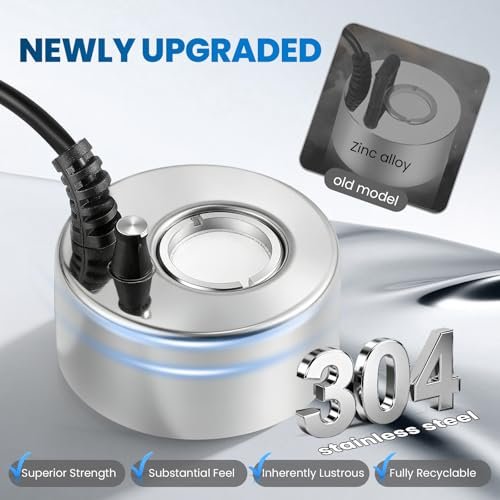
Heating tubes, fogger disc housings, and sauna elements use food-grade 304 or 316 stainless steel — construction that resists pool chemicals, hard water scale, and the thermal cycling that degrades cheaper materials.
Every heater in the lineup ships without a plug by design — because they require hardwired 220–240V circuits, and Mxmoonant states that requirement before you order, not after.
Dry-burn pressure switches, high-temperature cutoffs, IP67-rated power supplies on fogger units, and ETL certification on the 9KW sauna heater give the heating line a protection stack that covers the most common failure modes.
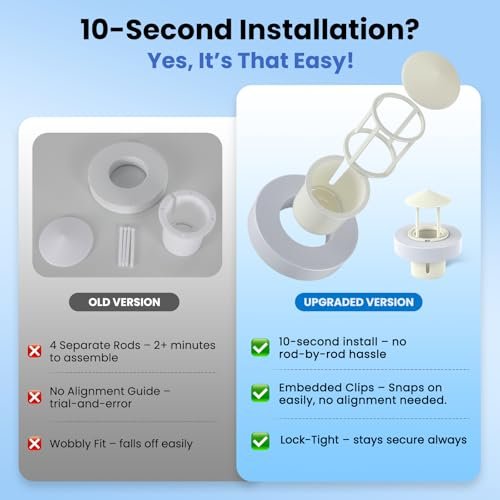
The Mxmoonant catalog runs from electric sauna heaters and pool heaters through ultrasonic mist makers, spa pumps, fuel transfer pumps, and a range of specialty tools — pool heater, spa pump, spa air blower, sauna heater, mist maker fogger, hydrosol maker, stained glass grinder, glass cutting tool, electric hoist, magnetic lifter, fuel transfer pump, paper creasing machine, centrifuge machine, and pond cover dome. The heating and fluid-handling lines share a common design logic: hardwired 220V construction, stainless steel wetted surfaces, and explicit sizing ranges so you buy the right unit the first time.
Three electric pool heaters from 2KW to 11KW cover pools from 400 to 1,300 gallons. All require hardwired circuits — the 11KW needs a 60A breaker — and use 316 stainless steel heating elements rated for chlorinated and salt water.
Four copper-motor spa pumps from 1HP to 4HP dual-speed handle everything from basic hot tub circulation on standard 110V household current to high-jet 220V configurations with 2" plumbing. Match HP to your jet count before ordering.
Two spa air blowers — 1HP and 1.5HP, both on 220V — come with AMP plugs, check valves, and the fittings needed for a direct installation. Built around pure copper motors for heat dissipation during continuous use.
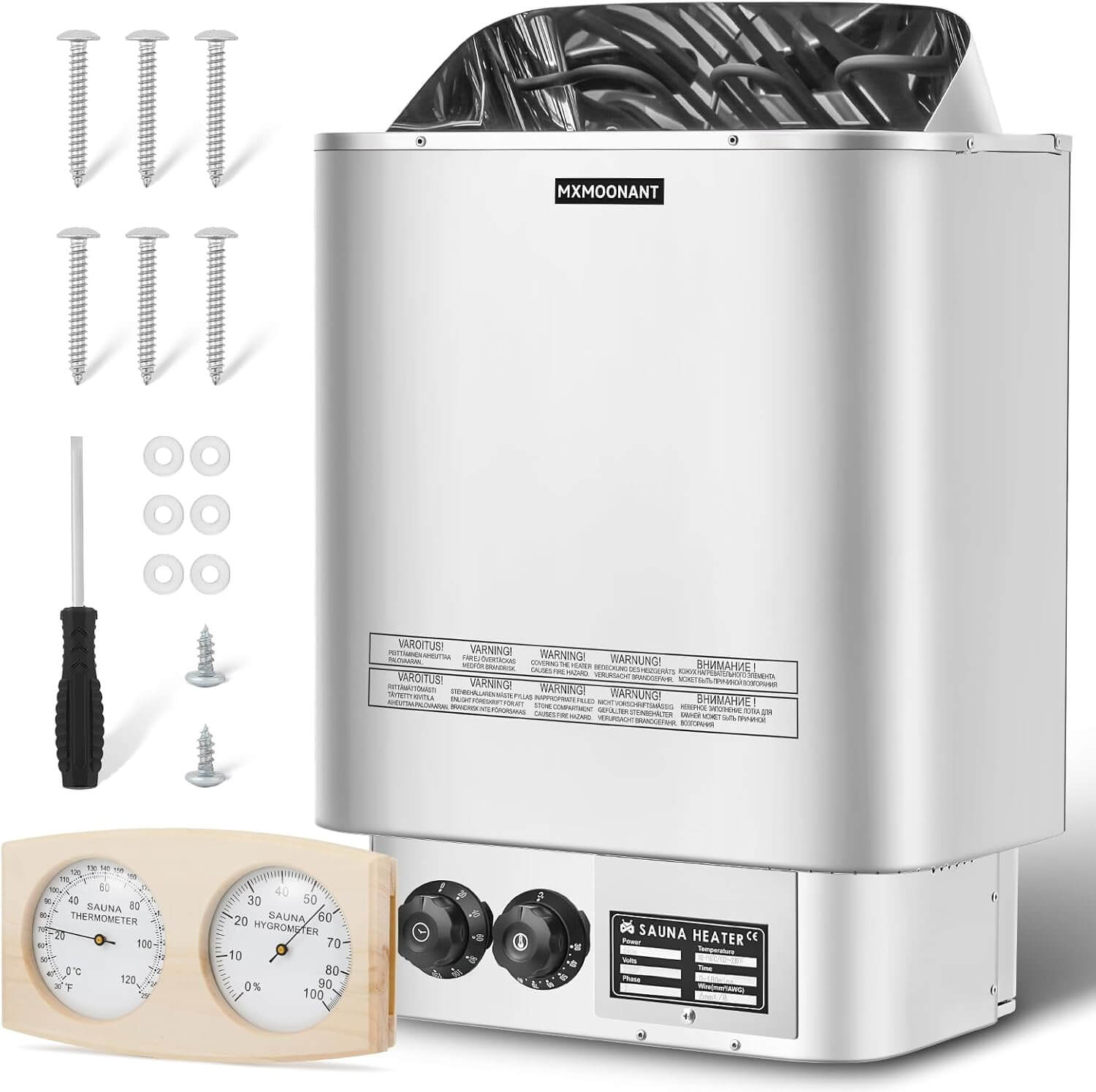
Five wall-mount electric sauna heaters spanning 6KW and 9KW, with dial and digital control variants plus an ETL-certified model. Coverage ranges from 170 to 460 cubic feet. Stones and wiring not included — both are covered in the sizing guide below.
Ultrasonic foggers from a single 350ml/h head up to a 12-head unit producing 8,400ml/h — all using 304 stainless steel disc housings and IP67-rated power supplies. Used for Halloween atmosphere, greenhouse humidity, and pond decoration.
A 5-liter distillation unit outputting 1.4L per hour for making hydrosol and distilled water at home, paired with a 60ml essential oil separator accessory. Built from 304 stainless steel with anti-dry and overheat protection.
Three electric hoists from 250kg wire-rope models up to a 1-ton G80 chain hoist. The wire-rope units include wired and wireless controls; the chain hoist runs a dual-brake system with mechanical ratchet and electric control brakes. Not rated for lifting people.
Three transfer pumps covering cordless 13GPM diesel transfer, wired 12V, and wired 24V configurations. All handle diesel, kerosene, and engine oil. None are rated for gasoline — that's a hard safety limit, not a suggestion.
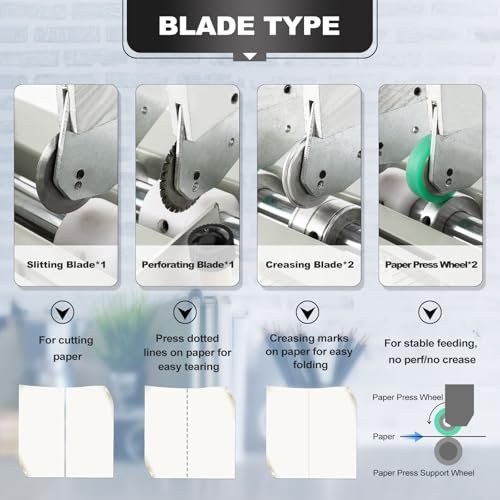
Two manual and two electric creasing machines handle paper from 60–500gsm across an 18"–18.5" feed width. The electric A470 offers variable speed from 0–100 RPM; all models process one sheet at a time for clean crease quality.
Two benchtop centrifuges — the 800-1 Basic at 40W with 20ml×6 rotors, and the 900-1 LCD at 60W with an LCD display and 15ml×6 rotors. Both top out at 4,000 RPM and run on 110V for lab, school, and research use.
Browse the complete brand catalog with up-to-date pricing on Amazon.
These 12 products span 9 of the 14 categories and represent the SKUs with the highest review volumes and Amazon subcategory rankings in the lineup — not because they're the cheapest, but because the spec sheet matched a real installation scenario for enough buyers that word got around.
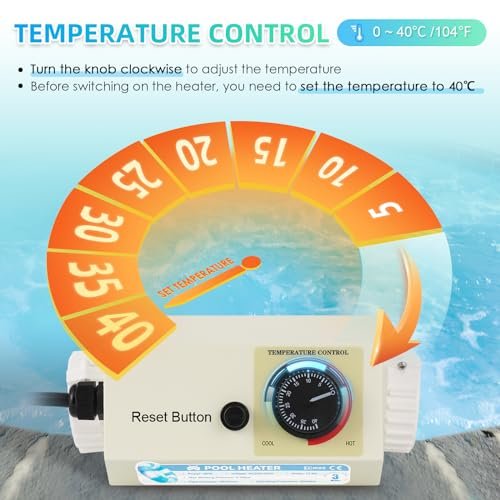
The pool heater line runs from a 2KW 110V unit for smaller hot tubs up to an 11KW 220V touchscreen model rated for pools around 1,300 gallons. All three units require hardwired connections — no standard plug — and use 1.5" SCH40 PVC plumbing with a circulation pump of at least 0.5HP (1HP for the 11KW). The 11KW features 316 stainless steel heating elements, a touchscreen display, and draws 50 amps, which means a 60A breaker minimum. These are season-extension tools for above-ground pool owners, not instant-heat systems — electric resistance heaters maintain temperature better than they gain it on cold nights below 50°F.
The Mxmoonant pool heater line covers three capacity points: the 2KW Spa Heater handles up to 400 gallons on 110V, the 3KW Pool Heater handles up to 500 gallons on 220V, and the 11KW Pool Heater is rated for pools around 1,300 gallons on 220V. Match your pool's actual gallon count to those figures before ordering — an undersized unit will run continuously without reaching your target temperature on cold days.
| Model | Max Gallons | Voltage | Breaker | Min. Circulation Pump |
|---|---|---|---|---|
| Spa Heater 2KW 110V | ~400 gal | 110V | 25A GFCI | ≥0.5HP circ pump |
| Pool Heater 3KW 220V | ~500 gal | 220–240V | 20A | ≥0.5HP circ pump |
| Pool Heater 11KW Touchscreen | ~1,300 gal | 220V | 60A | ≥1HP circ pump |
If you don't know your pool's gallon count, a rough calculation for a circular above-ground pool: diameter × diameter × depth × 5.9. A common 15-foot round pool at 48 inches deep holds roughly 3,000 gallons — well beyond what any of these units can heat efficiently on their own. These heaters are sized for smaller above-ground pools, hot tubs, spas, and stock tank setups, not full-size backyard pools.
Electric resistance heaters convert electricity to heat at close to 100% efficiency — every watt you put in becomes heat in the water. That's their strength. Their limitation is raw power: even 11KW is about 37,500 BTU, which is modest compared to a 100,000 BTU gas heater. At those output levels, these units maintain temperature well but gain it slowly.
A real-world data point from an r/AboveGroundPools user running a comparable electric heater: "It keeps the pool at 80 pretty well. Cool nights in the 50s or less will knock it down, but it will come back in a day or two." That's an honest description of the product category. If overnight temperatures drop into the 40s, the heater may struggle to hold 80°F — not because it's defective, but because the heat loss rate exceeds the heat gain rate. Insulating the pool with a solar cover when it's not in use is the single most effective way to improve overnight temperature retention with any electric heater.
All three Mxmoonant pool heaters include a pressure switch that cuts power if water flow drops below a safe threshold — specifically, if the pressure falls to 15kPa or below. This protects the heating element from dry-burn damage, which is the most common failure mode for inline electric heaters. The switch activates only when a circulation pump is running and providing adequate flow — which is why you cannot use a submersible pump or booster pump with these units. The heater requires a dedicated circulation pump (≥0.5HP for the 2KW and 3KW models, ≥1HP for the 11KW) plumbed through 1.5" SCH40 PVC to activate at all.
The 3KW and 11KW models do not come with plugs and cannot be wired to standard 110V household outlets. They require hardwired 220–240V circuits — the same type used for electric dryers. The 2KW model runs on 110V but still requires hardwired connection to a 25A GFCI breaker without a standard plug. In all three cases, a licensed electrician should complete the connection. These are not plug-and-play appliances, and treating them as such risks tripped breakers at best and fire hazards at worst.
Both the 3KW and 11KW units include two PVC pipe connectors — one with a 48mm (1.88") inner diameter and one with 50mm (2") — to accommodate the most common pipe sizes. The product specification calls for SCH40 1.5" PVC pipe for the plumbing run. If your existing pool plumbing uses a different diameter, you'll need a reducer fitting before the heater inlet. Don't use flexible spa tubing as a substitute for rigid SCH40 pipe on the pressure-side connection.
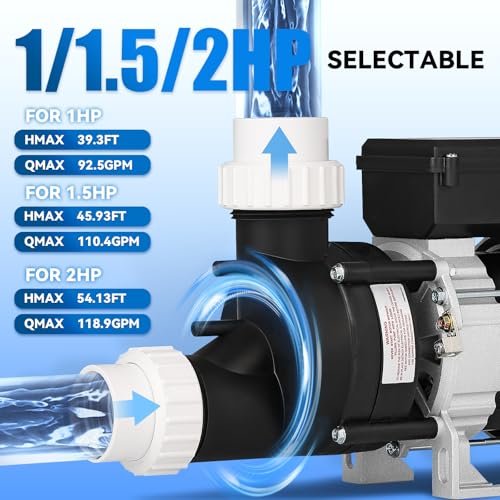
Four spa pumps covering 1HP through 4HP dual-speed configurations, all built with pure copper motor windings — a construction detail that matters because copper dissipates heat better than aluminum substitutes, and circulation pumps are the most failure-prone component in any hot tub system. The 1HP, 1.5HP, and 2HP models run on 110V with 1.5" SCH40 PVC plumbing and standard US plugs, making them straightforward replacements for most residential hot tubs. The 4HP dual-speed model steps up to 220–240V with 2" plumbing and a 56 Frame motor, without a plug — hardwired installation required.
Mxmoonant's four spa pumps cover 1HP through 4HP dual-speed, and the right choice depends on three things: how many jets your hot tub has, what plumbing diameter is already installed, and whether you're on 110V or need 220V performance. Get any of those wrong and you'll either have weak jets or a pump that can't prime against your existing plumbing.
Possibly, but not always. A higher HP pump moves more water per minute — which is only useful if your jets and plumbing can handle the increased flow without restriction. If you jump from a 1HP to a 2HP pump in a tub designed for 1HP flow, you may get better jet performance or you may get a pump that creates excess back pressure against undersized jets. The safer upgrade path is matching the HP of the original pump and switching to copper-wound motors like the Mxmoonant line for longevity rather than jumping HP classes.
The 1HP, 1.5HP, and 2HP models use 1.5" SCH40 PVC connections. The 4HP Dual-Speed uses 2" connections. Before ordering any replacement pump, measure your existing plumbing at the pump inlet and outlet — not the flexible tubing coming off the pump housing, but the rigid PVC pipe supplying it. A 1.5" pump on a 2" pipe run needs a reducer; a 2" pump on a 1.5" run won't flow correctly and risks cavitation. Hot tub pumps are not universally interchangeable even within the same HP class.
All four Mxmoonant spa pumps use pure copper motor windings. This matters in the context of spa pump longevity because aluminum-wound motors — common in lower-cost replacements — dissipate heat less efficiently under sustained load. Spa pumps run continuously in hot, humid environments; the motor's ability to shed heat directly affects how long it lasts before the windings degrade. Circulation pumps are, as one r/hottub commenter put it, "the most likely part to fail on any hot tub." Copper windings aren't a guarantee, but they address the primary failure mechanism more directly than aluminum alternatives.
If you're pairing a Mxmoonant spa pump with a Mxmoonant pool heater — a common setup — remember that the heater's pressure switch requires a minimum 0.5HP circulation pump to generate enough flow to activate. The 2KW and 3KW heaters need ≥0.5HP; the 11KW needs ≥1HP. All four Mxmoonant spa pumps exceed these minimums, but confirm the flow rate matches the heater's spec before assuming the pair will work together without issue.
Two spa air blowers — a 1HP and a 1.5HP model, both on 220V — built around pure copper motors and shipped with the hardware most replacement jobs actually need: a certified AMP plug, 1" check valve, drain valve, tee fitting, and a 1.5" to 1" adapter. The check valve matters because it prevents water from backflowing into the blower housing when the system is off — a common cause of blower failure in retrofitted installations. Both models use 1.5" plumbing.
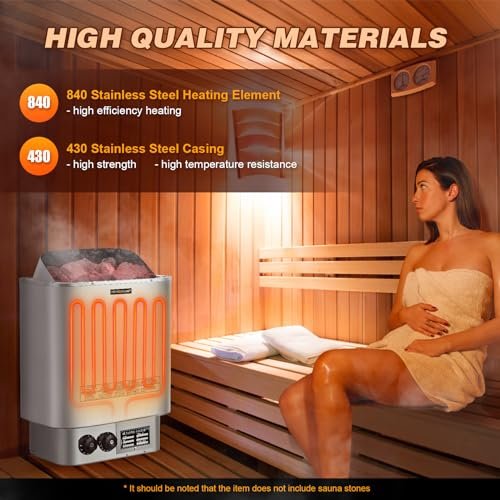
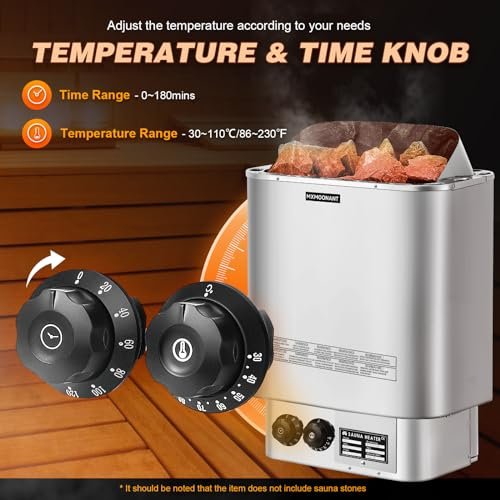
Five wall-mount electric sauna heaters spanning 6KW and 9KW, with dial-control and digital-control variants plus an ETL-certified 9KW model. Coverage ranges from 170 cubic feet minimum to 460 cubic feet maximum — roughly a 10×10×9-foot room on the 6KW end and a 13×12×9-foot room on the ETL 9KW. All five run on 220V hardwired circuits, require a 30A breaker for the 6KW models, use 840-grade stainless steel heating elements, and do not include sauna stones — you'll need 30–40 lbs of stones, sourced separately. No plug is included by design.
The standard sizing rule for electric sauna heaters is 1KW per 50 cubic feet of room volume. Measure your room's interior length, width, and ceiling height in feet — multiply all three. That number tells you exactly which Mxmoonant model fits. The 6KW handles 170–300 cubic feet; the 9KW handles 250–460 cubic feet depending on the variant.
Take a room that's 10 feet long × 9 feet wide × 8 feet tall. That's 720 cubic feet — way too large for any single Mxmoonant heater. Now take a more typical barrel or converted-shed build: 7 × 6 × 7 = 294 cubic feet. That lands squarely in the 6KW range. A larger custom room at 10 × 9 × 9 = 810 cubic feet would require multiple heaters or a commercial unit — don't try to push a 9KW into a room that size expecting good results.
If your calculated cubic footage lands between 250 and 300 — which is where the 6KW tops out and the 9KW begins — choose the 9KW. The extra thermal headroom means faster heat-up on cold mornings and less strain on the heating elements over time. Oversizing slightly is better than running a 6KW unit at its absolute limit for every session.
| Model | KW Rating | Room Range (cu ft) | Breaker Required |
|---|---|---|---|
| Sauna Heater 6KW Dial | 6KW | 170–300 | 30A |
| Sauna Heater 6KW Digital | 6KW | 170–300 | 30A |
| Sauna Heater 9KW Dial | 9KW | 250–425 | ~40–50A |
| Sauna Heater 9KW Digital | 9KW | 250–425 | ~40–50A |
| Sauna Heater 9KW ETL Certified | 9KW | 265–460 | ~40–50A |
You may see the "rule of 200" referenced on sauna forums — it suggests one kilowatt per 200 cubic feet of insulated sauna space. That figure assumes well-insulated walls with no glass, no exterior-facing walls, and no concrete floors absorbing heat. Most home builds don't meet all those conditions. The 1KW per 50 cubic feet rule is the conservative standard used in North American installations, and it's the one the Mxmoonant specs are built around. Stick with it.
Every Mxmoonant sauna heater runs on 220–240V. In North America, that means a two-hot-leg circuit — the same type used for electric dryers and ranges. It is not a standard household outlet. If your sauna room is in a garage, shed, or converted outbuilding that was wired before 1990, assume the 220V circuit doesn't exist and budget for an electrician to run one. A 6KW unit draws roughly 27 amps continuously, which is why a 30A breaker is the minimum — not a suggestion.
Stones are not included with any model. You'll need 30–40 lbs of sauna-rated stones loaded into the basket before the first use. Running the heater without stones stresses the elements and can trip the high-temperature protection switch. Source the stones separately before your installation appointment.
The single most common reason a new Mxmoonant sauna heater won't power on after installation is a wiring fault — either a missing copper terminal jumper, incorrect wire placement on the terminal block, or a circuit that doesn't supply true 220V with two separate hot legs. None of these require an electrician to diagnose if you know what to look for, but all of them require correct resolution before the unit will run.
The terminal block on Mxmoonant sauna heaters includes an E-shaped copper connector that bridges specific terminals to complete the internal circuit. This piece is small, easy to miss during unboxing, and sometimes loose in the packaging. If your unit shows no response after wiring — no display, no relay click, nothing — check the terminal block before anything else. The jumper should be seated across the correct terminals as shown in the installation diagram inside the packaging. A missing or misseated jumper will produce a completely dead unit with no fault indication.
This issue was documented directly in the r/Sauna community: one user described their new Mxmoonant arriving "missing the 3 prong or E shaped copper terminal jumper" and the unit refusing to start. Checking the terminal block first takes 60 seconds and resolves the no-start condition without any additional parts.
In North America, a 220–240V circuit consists of two hot legs (each at roughly 120V relative to ground, 240V between them) plus a ground wire. The Mxmoonant heater terminal block accommodates this configuration — typically labeled L1, L2, and ground. Do not connect a single 120V hot leg and neutral and expect 220V operation. That will not work and may trip a breaker or damage the unit.
Wire gauge matters too. A 6KW heater drawing 27 amps continuously needs 10 AWG wire at minimum on a 30A breaker. If an electrician runs 12 AWG on a 30A circuit, you have an undersized conductor — a fire hazard, not a heater problem. Confirm wire gauge matches the breaker rating before energizing.
Every Mxmoonant sauna heater includes a hygrothermograph — a combined temperature and humidity gauge. Mount it at bench height on the opposite wall from the heater. It tells you both the current temperature in Fahrenheit and the relative humidity simultaneously, which matters when you're deciding whether to ladle water onto the stones. A reading of 180°F at 15% humidity is a dry Finnish session; the same temperature at 30% after a ladle or two gives a different experience entirely. Use it to calibrate your sessions rather than guessing.
Four ultrasonic mist makers ranging from a single-head 350ml/h unit up to a 12-head pro outputting 8,400ml/h on a 400W IP67-rated power supply. All models use 304 stainless steel disc housings and operate at 1.7MHz — above the human hearing range, no heat, no chemicals, safe for fish and plants. The single-head units run on 110–240V and work at 5–7cm water depth; the multi-head units require 7–9cm depth and include floats for deeper water installations. Discs are consumable — expect 8 months to 1 year of life with clean water, less in hard water areas.
Head count determines total mist output, and mist output determines whether your setup produces a convincing effect or barely registers. The numbers scale linearly: 1 head produces 350ml per hour, 6 heads produce 4,200ml/h, 10 heads produce 7,000ml/h, and 12 heads produce 8,400ml/h. Match that output to your container or space before ordering — more heads than your setup needs wastes money; fewer heads means underwhelming mist.
| Model | Heads | Output (ml/h) | Best For | Power Supply |
|---|---|---|---|---|
| Mist Maker Single Head | 1 | 350 | Desktop fountains, small fish tanks, terrariums, single pumpkin | 16.5W, 110–240V |
| Mist Maker Single Head LED | 1 | 350 | Same as above plus decorative light effect | 16.5W, 110–240V |
| Mist Maker 10-Head Pro | 10 | 7,000 | Large ponds, outdoor Halloween displays, greenhouse rows | 400W, IP67 |
| Mist Maker 12-Head Pro | 12 | 8,400 | Stage use, large garden ponds, commercial greenhouse humidity | 400W, IP67 |
There's no 6-head model currently listed in the active Mxmoonant lineup — the jump goes from the single-head units to the 10-head and 12-head pro models. If your pond or display falls in the medium range, the 10-head at 7,000ml/h is the right starting point, not two single-head units running simultaneously.
Single-head units operate at 5–7cm (roughly 2–2.75 inches) of water depth. The 10-head and 12-head units need 7–9cm (2.75–3.54 inches). This isn't a suggestion — too shallow and the unit flashes its indicator light and produces no mist; too deep and output drops significantly. If your pond or container runs deeper than 9cm, use the included float. The float holds the disc board at the correct depth regardless of the water level below it.
These aren't fog machines and they don't use heat. A ceramic disc vibrates at 1.7MHz — well above human hearing range — and that vibration atomizes water into a fine cool mist. No fog juice, no propylene glycol, no heat. That's why they work safely in fish ponds, terrariums, and plant enclosures where temperature stability matters. It's also why the mist dissipates close to the water surface rather than rising like steam from a hot fog machine.
The 10-head and 12-head units include a 400W transformer with an IP67 waterproof rating. IP67 means dust-tight and can withstand up to 1 meter of water submersion for 30 minutes — but that doesn't mean you should put it in the water or leave it sitting in a puddle. Place it near the water, not in it. The power supply handles the wet, mist-saturated air of an outdoor pond installation; it's not designed for permanent submersion. The voltage chain runs 110V mains input → transformer → DC 48V output to the disc board. Don't try to run the disc board from a DC power supply you already own unless you've confirmed it matches the 48V DC output spec.
In general use, "fogger" and "mist maker" are used interchangeably for ultrasonic water atomizers. The meaningful distinction is between ultrasonic foggers (like these — cool mist, no chemicals) and theatrical fog machines (which heat a glycol-based fluid to produce hot vapor). Ultrasonic foggers won't trigger photoelectric smoke detectors the way theatrical fog machines can. They produce a low-lying, cool, water-based mist rather than a rising warm vapor. If you've seen the question about smoke detectors — that concern applies to theatrical fog machines, not ultrasonic pond foggers.
If your Mxmoonant mist maker stops producing fog but the power indicator light is still on, the disc is almost certainly the issue — not the unit itself. Ceramic discs are consumable components that degrade through continuous vibration and mineral deposit buildup. With clean tap water, expect 8 months to 1 year of usable life before output drops noticeably. In hard water areas, that timeline shortens.
Turn off and unplug the unit completely. Remove the disc board from the water. Dip a cotton swab in white vinegar or clean water and gently wipe the surface of the ceramic disc in a circular motion. Don't press hard — the disc surface is fragile and scratching it accelerates degradation. Rinse with clean water, allow to dry, and reinstall. In hard water areas, do this every 2–4 weeks to extend disc life significantly.
Mxmoonant includes spare discs with several models — the single-head comes with 3 spare atomizing discs, and the 12-head pro includes 22 total (12 installed plus 10 spares). Replacement discs are available separately. The swap itself is straightforward: a small key tool (included with multi-head units) allows disc removal without specialized tools.
If your tap water has high mineral content — common in the American Southwest, parts of Texas, and much of the Midwest — expect disc life closer to 4–6 months rather than 8–12. The mineral deposits essentially coat the disc surface and dampen its vibration frequency over time. Two options extend disc life meaningfully: use distilled or filtered water in the unit, or clean the disc more frequently with the cotton swab method. Distilled water is the more effective approach for anyone in a hard water area who wants consistent output year-round.
A long-running thread in a Facebook pond group documented a Mxmoonant 10-head unit running for over 2 years with fish in the pond — no fish losses attributable to the fogger. The key: the mist operates at room temperature and doesn't alter water chemistry. That same thread noted "would stop working within the month" reports from other users — almost all of which, on closer inspection, were disc degradation rather than unit failure. The disc is a $5–15 replacement, not a warranty issue.
A two-product line for making hydrosol and distilled water at home: the main Hydrosol Maker 5L distillation unit and the Essential Oil Separator Kit accessory. The main unit uses 12 capillary tubes for steam condensation instead of a traditional spiral tube, outputs 1.4 liters per hour from a 5-liter 304 stainless steel tank, and runs a 0–180 minute timer with anti-dry and overheat protection. The separator accessory adds a 60ml glass separator with a bottom drain valve, allowing you to isolate the essential oil layer from the hydrosol output.
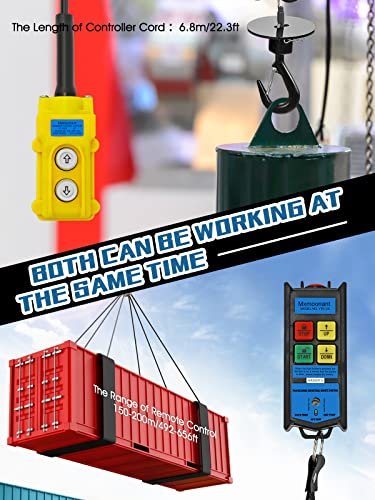
Three electric hoists covering 250kg wire-rope, 500kg wire-rope, and a 1-ton G80 chain hoist. The two wire-rope models (250kg and 500kg) include both wired pendant controls and wireless remotes with a 492–656ft range, run on 110V standard household current, and reach 30m (98ft) lifting height — but carry an ED25% duty cycle, meaning no more than 15 continuous minutes of operation per hour. The 1-ton chain hoist uses a G80 double chain with a triple safety factor, runs a dual-brake system, and reaches 15ft lifting height. None of these units are rated for lifting people.
Three electric hoists cover three distinct use cases: light attic and garage storage (250kg wire rope), moderate workshop and equipment lifting (500kg wire rope), and industrial chain lifting up to 1 ton. The chain hoist and wire rope hoists differ in more than capacity — they have different duty cycles, different control options, and different maximum heights. Choose based on what you're lifting, how often, and how high.
Both wire rope hoists carry an ED25% duty cycle rating — "ED" stands for Energization Duration. ED25% means the motor can run for 25% of any given time period before it needs to cool. In practical terms: a maximum of 15 continuous minutes of lifting per hour, with 45 minutes of rest. The spec sheet also notes a maximum of 150 starts per hour, which sounds like a lot until you're doing repetitive short lifts in a warehouse setting.
This isn't unique to Mxmoonant — most residential and light-commercial wire rope hoists operate on similar duty cycles. The 1-ton chain hoist doesn't carry the same ED25% restriction because its G80 chain and dual-brake mechanical system are rated for heavier sustained use. If your application involves continuous lifting cycles over several hours, the chain hoist is the right category regardless of weight class.
The 250kg and 500kg models use 5mm galvanized steel wire rope. Wire rope is flexible, spools smoothly onto a drum, and works well for tall lifts where the rope needs to accumulate on the drum in multiple layers. The limitation: wire rope can tangle if the hoist isn't mounted perfectly vertical or is operated with no load — the rope needs weight to wind evenly. Neither wire rope model includes a rope guider, so vertical mounting alignment matters.
The 1-ton model uses a G80-grade steel double chain with a 6.3mm diameter and a triple safety factor. Chain doesn't tangle the way rope can under slack conditions, handles repetitive cycling better, and the dual-brake system (mechanical ratchet plus electric control brake) provides immediate stopping power even during a power failure. For any application where the load might need to be held in position during a power interruption, the chain hoist is the safer architecture.
All three Mxmoonant hoists are rated for lifting objects only. None are designed, rated, or certified for lifting people under any circumstances. This isn't a liability hedge — it's a technical reality. Personnel-rated hoists (man-rated hoists) require a minimum 10:1 safety factor, certification to ASME B30.11 or equivalent standards, and regular load-testing documentation. These units are not that. Don't use them to lift, support, or position any person at any height.
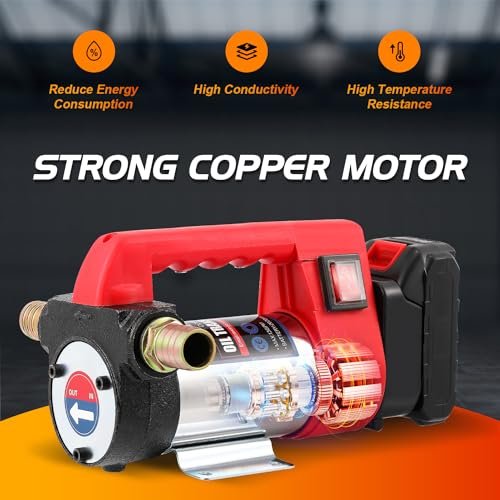
Three fuel transfer pumps for diesel, kerosene, engine oil, and lubricating oil — none are rated for gasoline, and that's a hard safety limit because incompatible seals create a fire risk. The cordless 13GPM model runs on two 2,000mAh lithium-ion batteries at 4,200 RPM, pumps 400 liters on a full charge (roughly 105 gallons), reaches 8m (26ft) lift height, and draws from 5m (16ft) below the pump. At 13GPM, a 50-gallon tank fills in under 4 minutes. The 12V and 24V wired models run at 3.2GPM — slower but suited for vehicle-mounted installations where a battery is already powering the vehicle.
The Mxmoonant fuel transfer pump line handles diesel, kerosene, engine oil, lubricating oil, gear oil, and hydraulic oil. It does not handle gasoline. That distinction is not a preference or a soft guideline — it's a hard safety boundary. The internal seals and pump components are not rated for gasoline's chemical properties, and using this equipment with gasoline creates a fire risk from seal degradation and potential vapor ignition. Don't do it.
| Fluid | Cordless 13GPM | 12V Wired 3.2GPM | 24V Wired 3.2GPM |
|---|---|---|---|
| Diesel | ✓ | ✓ | ✓ |
| Kerosene | ✓ | ✓ | ✓ |
| Engine oil | ✓ | ✓ | ✓ |
| Lubricating oil | ✓ | ✓ | ✓ |
| Gear oil | ✓ | ✓ | ✓ |
| Hydraulic oil | ✓ | ✓ | ✓ |
| Gasoline / petroleum fuel | ✗ | ✗ | ✗ |
| Water | ✗ | ✗ | ✗ |
| Chemical / corrosive liquids | ✗ | ✗ | ✗ |
| Edible liquids | ✗ | ✗ | ✗ |
At 13 gallons per minute, the Cordless Diesel Pump 13GPM fills a 50-gallon tank in under 4 minutes. A 100-gallon tank takes roughly 8 minutes. The pump runs at 4,200 RPM on two 2,000mAh lithium-ion batteries — one full charge moves 400 liters (about 105 gallons) before battery exhaustion. That's enough to fuel a large agricultural harvester in the field without a second charge.
The 8m (26ft) vertical lift height and 5m (16ft) suction depth specs tell you how far the pump can push and pull fluid vertically. If your diesel tank sits 10 feet below the pump mounting point, the 5m/16ft suction spec covers it comfortably. If the tank is further down — say, an underground farm tank — check the depth before assuming the pump will self-prime adequately.
Both wired models produce 3.2GPM through a copper winding rotor with CE certification. The difference is voltage: the Oil Transfer Pump 12V connects to 12V DC systems (most light trucks, boats, and agricultural equipment), while the Oil Transfer Pump 24V connects to 24V systems (larger commercial trucks, buses, heavy equipment). Check your vehicle or equipment's electrical system voltage before ordering. Running a 12V pump on a 24V system will damage the motor; a 24V pump on a 12V system won't run at rated speed.
Both wired models are designed for intermittent use — the manufacturer recommends no more than one hour of continuous operation, followed by a 20-minute cooling rest before the next cycle. The 12V and 24V pumps include a built-in overheating protector that shuts the unit down automatically if it runs too hot, but that protection shouldn't be relied on as a substitute for following the duty cycle. The cordless model's runtime is naturally limited by battery capacity, which serves as a built-in rest interval for most field applications.
Battery-powered diesel transfer pumps are safe when used with compatible fluids and operated correctly. The safety concerns associated with fuel transfer equipment center on vapor ignition — gasoline produces flammable vapors that can ignite from electrical sparks. Diesel has a much higher flash point (approximately 125–180°F, versus gasoline's negative-40°F flash point) and doesn't produce ignitable vapors at normal operating temperatures. A pump running diesel in a properly ventilated environment presents minimal fire risk from the pump operation itself. The risk emerges entirely when the wrong fluid is used. Stick to the compatibility matrix above.
Four paper creasing machines — two manual and two electric — covering an 18"–18.5" feed width and paper weights from 60–500gsm (manual G460 handles 70–450gsm). The electric E470 Standard runs at a fixed 25 RPM; the electric A470 Variable offers 0–100 RPM adjustable speed. Both electric models include crease, cut, perforation, and press blades. The manual H460 and G460 are crease-only with single blades and manual feed. All four models process one sheet at a time — that's not a limitation, it's the correct operating method for clean crease quality.
The four Mxmoonant creasing machines split into two manual and two electric models. The right choice isn't primarily about paper weight — all four handle 60–500gsm (the G460 manual handles 70–450gsm) — it's about volume, speed, and whether you need functions beyond a clean fold line.
Manual models (H460 and G460) suit occasional use: wedding invitations, hand-assembled card sets, small-run brochures where you're processing 20–50 sheets in a session. The handle action is deliberate and quiet, the machines are lighter, and there's no motor to maintain. If you're sitting at a craft table once a week, manual is the sensible choice.
Electric models (E470 Standard and A470 Variable) make sense once you're regularly processing more than 100 sheets per session, or when you need perforation and cutting in the same pass as creasing. The motor drives the sheet through automatically once inserted — you're not pressing a handle for each sheet. The A470 Variable adds speed control (0–100 RPM), which matters when working with mixed paper weights in the same session; thick 300gsm cardstock benefits from a slower pass than 80gsm copy paper.
| Model | Crease | Cut | Perforation | Press | Speed |
|---|---|---|---|---|---|
| Manual Creaser H460 Dual-Scale | ✓ (1 blade) | ✗ | ✗ | ✗ | Manual |
| Manual Creaser G460 18in | ✓ (1 blade) | ✗ | ✗ | ✗ | Manual |
| Electric Creaser E470 Standard | ✓ (2) | ✓ (1) | ✓ (1) | ✓ (2) | Fixed 25 RPM |
| Electric Creaser A470 Variable | ✓ (2) | ✓ (1) | ✓ (1) | ✓ (2) | 0–100 RPM |
The crease blade has three adjustable width settings: 1.0mm, 1.2mm, and 1.5mm. Use 1.0mm for clean, narrow fold lines on cardstock; 1.5mm for thicker paper where a wider channel makes folding by hand easier without cracking the surface. The cutting blade is for single-sheet trimming and is not suited for thick stock — the product documentation is explicit that "cutting is not its primary function."
All four models process one sheet of paper at a time. Don't feed a stack expecting it to crease multiple sheets in one pass — it won't, and forcing multiple sheets risks jamming the mechanism and producing unclean crease lines on both sheets. One sheet, one pass. For the manual models that's the natural pace anyway; for the electric models, the T-shaped paper feed guide ensures each sheet aligns correctly for a consistent crease position across every run.
The H460 handles 60–500gsm — the broadest range in the manual lineup. The G460 handles 70–450gsm. If you regularly work with very lightweight papers (60–70gsm tissue or onion skin) or very heavy board (450–500gsm), the H460 is the right manual choice. For the electric models, both handle the full 60–500gsm range; the A470's variable speed gives it more practical versatility at the extremes of that range than the fixed-speed E470.
Two benchtop centrifuges for lab, school, and research use: the 800-1 Basic and the 900-1 LCD. Both top out at 4,000 RPM on 110V, run for up to 60 minutes per cycle, and hold six tubes. The 800-1 uses 20ml tubes and generates 1,790×g at 40W; the 900-1 upgrades to an LCD display showing speed, time, and RCF simultaneously, runs at 60W, and uses smaller 15ml tubes generating 1,685×g. Tubes must be loaded symmetrically — if running a single sample, balance it with a water-filled tube of the same size on the opposite side of the rotor.
One Mxmoonant product carries ETL certification: the Sauna Heater 9KW ETL Certified (B0D9B4KGHL). Two fuel transfer pump models carry CE certification: the Oil Transfer Pump 12V and the Oil Transfer Pump 24V. These aren't interchangeable certifications, and they matter differently depending on where and how you're installing the product.
ETL is a product safety certification issued by Intertek, one of the National Recognized Testing Laboratories (NRTLs) recognized by OSHA. An ETL-listed product has been tested to the same UL and CSA safety standards that govern electrical equipment sold in North America. For a 220V hardwired sauna heater, that testing covers insulation resistance, heating element integrity, grounding continuity, and protection against overcurrent and overtemperature conditions.
Why does this matter? Some jurisdictions require ETL or UL listing for hardwired 220V appliances before an electrical permit will be issued. If your local building code requires listed appliances on permanent circuits — common in newer construction and renovation permits in many US states — the ETL-certified 9KW model is the one that satisfies that requirement. The non-certified 6KW and 9KW models in the same lineup are not ETL-listed, which may affect permit compliance depending on your jurisdiction.
The ETL-certified model also covers a slightly larger room range — 265–460 cubic feet versus 250–425 cubic feet for the standard 9KW Dial and 9KW Digital — reflecting the tested and verified performance bounds confirmed during the certification process.
CE marking indicates that a product meets the European Union's health, safety, and environmental protection requirements. For the 12V and 24V oil transfer pumps, the CE certification covers the electrical construction and electromagnetic compatibility standards relevant to DC-powered equipment. In the US market, CE is not a substitute for UL or ETL listing, but it does confirm that the pump construction has been evaluated against recognized safety standards — relevant for buyers in commercial or agricultural operations where equipment documentation is required for insurance or regulatory compliance.
| Product | ETL | CE | Neither |
|---|---|---|---|
| Sauna Heater 9KW ETL Certified | ✓ | — | — |
| Sauna Heater 6KW Dial / Digital | — | — | ✓ |
| Sauna Heater 9KW Dial / Digital | — | — | ✓ |
| Oil Transfer Pump 12V | — | ✓ | — |
| Oil Transfer Pump 24V | — | ✓ | — |
| Cordless Diesel Pump 13GPM | — | — | ✓ |
If third-party certification is a purchase requirement for your installation — a permit-required sauna build, a commercial vehicle fleet operation with insurance requirements, a regulated agricultural facility — the table above tells you which products meet that bar. If certification isn't a requirement, the non-certified models in each line are functionally comparable; the ETL 9KW is the right pick specifically when the certification itself is the deciding factor.
We flagged this one because it covers exactly the upgrade question we hear most — swapping a 4KW unit for the 6KW to push room temperature up by around 50 degrees. You'll see the full installation from start to finish, not just the glamour shots. If you're sitting on a underpowered setup and wondering whether the 6KW is worth the swap, this walkthrough gives you a real answer before you order.
Calculate your sauna room's cubic footage by multiplying length × width × height in feet. The standard rule is 1KW per 50 cubic feet. The Mxmoonant 6KW Dial covers 170–300 cubic feet; the 9KW models cover 250–460 cubic feet. If your room falls between 250 and 300 cubic feet, choose the 9KW for thermal headroom.
The most common cause is a missing or misseated E-shaped copper terminal jumper on the terminal block — a small connector that bridges specific terminals to complete the internal circuit. Check the terminal block before anything else. The second most common cause is a 110V circuit rather than the required 220–240V two-hot-leg configuration. All Mxmoonant sauna heaters require a hardwired 220V circuit.
With clean tap water, ceramic mist discs typically last 8 months to 1 year before mist output drops noticeably. In hard water areas, expect 4–6 months. Clean the disc surface regularly with a cotton swab to extend life. Replacement discs are available separately, and several models include spares — the 12-Head Pro includes 22 discs total.
Ultrasonic mist makers like the Mxmoonant line use high-frequency disc vibration (1.7MHz) to atomize water into cool mist — no heat, no chemicals, safe for fish and plants. Theatrical fog machines heat a glycol-based fluid to produce warm rising vapor. Ultrasonic foggers produce low-lying, cool, water-based mist and won't trigger photoelectric smoke detectors the way heated fog machines can.
The 11KW Pool Heater Touchscreen is rated for pools around 1,300 gallons. On cool nights in the 50°F range, it maintains temperature reasonably well but may lose a few degrees overnight — it regains that within a day of normal operation. Using a pool cover when the pool is not in use is the most effective way to retain overnight heat regardless of the heater used.
No. The Cordless Diesel Pump 13GPM is not rated for gasoline, petroleum fuel, water, chemical liquids, or edible liquids. It handles diesel, kerosene, engine oil, lubricating oil, gear oil, and hydraulic oil only. Using it with gasoline creates a fire risk due to incompatible seal materials. This applies to all three Mxmoonant transfer pump models.
Generally yes, with compatibility checks. The Mxmoonant 1HP, 1.5HP, and 2HP spa pumps use 1.5" SCH40 PVC connections and run on 110V — matching most residential hot tubs built since the 1990s. Confirm your existing plumbing diameter and voltage before ordering. The 4HP Dual-Speed uses 2" connections and requires 220–240V; it won't directly replace a 1.5" 110V pump without plumbing and electrical modifications.
ED25% (Energization Duration 25%) means the hoist motor can run for a maximum of 15 continuous minutes per hour before requiring a 45-minute rest period. Both wire rope models — the Electric Hoist 250kg and the Electric Hoist 500kg — carry this rating. The Electric Chain Hoist 1-Ton does not carry the same restriction and is better suited for applications requiring repetitive lifting cycles.
Higher HP increases flow, which only improves jet performance if your existing jets and plumbing can handle the increased volume without restriction. Jumping from 1HP to 2HP in a system designed for 1HP may create back pressure against undersized jets. The safer upgrade is matching original HP with a higher-quality copper-wound motor like the Mxmoonant line, rather than increasing HP class.
For occasional low-volume use, the Manual Creaser H460 Dual-Scale handles 60–500gsm with 1mm crease accuracy — sufficient for most invitation cardstock in the 120–300gsm range. For regular higher-volume production, the Electric Creaser A470 Variable at 0–100 RPM adjustable speed handles thick cardstock more cleanly than the fixed 25 RPM E470 Standard, which can stress heavier paper on a single pass.
No. The pool heaters require a dedicated circulation pump — not a booster pump or submersible pump — plumbed via 1.5" SCH40 PVC. The 2KW and 3KW models require a circulation pump of at least 0.5HP; the 11KW requires at least 1HP. The pressure switch activates at flow above 15kPa — anything below that threshold and the heater won't engage, protecting the heating element from dry-burn damage.
The Cordless Diesel Pump 13GPM transfers approximately 400 liters (about 105 gallons) per full charge across two 2,000mAh lithium-ion batteries. At 13 GPM, that's enough to fill a 50-gallon tank in under 4 minutes, or a 100-gallon tank in roughly 8 minutes. Recharge between jobs requiring more than 100 gallons total transfer.
"I framed a 9×8×8-foot sauna room in my basement and measured 576 cubic feet — too large for the 6KW, so I ordered the 9KW Dial. Heat-up time to 175°F is about 45 minutes on a cold morning with the door sealed. The hygrothermograph is genuinely useful for dialing in humidity when ladling water. The wiring took an electrician about 2 hours to sort out correctly, which wasn't a surprise given the 220V requirement. Stones not included was fine since I sourced them locally."— Kevin M., home sauna builder, Silver Spring, on sauna heater
"Running the 10-Head Pro in a backyard koi pond for Halloween and keeping it going through spring for the atmosphere effect. The output at 7,000ml/h over a decent-sized pond surface is exactly what you'd hope for — thick low-lying mist. What I wasn't expecting: the disc life question. After about 9 months in average tap water, output dropped noticeably. Ordered replacement discs, swapped them in, back to full output. Not a defect, just something to know going in."— Rachel T., backyard pond owner, on mist maker fogger
"Replaced a failed 1HP pump in my older hot tub with the Mxmoonant Spa Pump 1HP 110V. The copper motor spec was the deciding factor — I'd had an aluminum-wound replacement from a local spa shop last 18 months before the windings went. This one's been running 6 months with no issues and quieter than the previous pump. The 1.5" SCH40 plumbing fit directly. Only note: the product listing is sparse on specs — confirm the 1HP, 92.5 GPM, and 1.5" fittings match your system before ordering."— Dave L., hot tub owner replacing a failed pump, on spa pump
"The 11KW does what the spec says for a 1,000-gallon above-ground pool. It kept water at 80°F through most of October in the mid-Atlantic. Two nights when temperatures dropped to 48°F, it fell to 76°F overnight and recovered by noon the next day — exactly what an r/AboveGroundPools user described before I bought. That's not a failure, that's just physics with electric resistance heating. The touchscreen and 316 SS element are both genuine upgrades over what I'd had before."— Jennifer H., pool owner extending swim season past Labor Day, on pool heater
"We use the 13GPM Cordless Diesel Pump on our farm for the harvest combine and a pair of diesel tractors. At 13 GPM, a 60-gallon tractor tank fills in about 5 minutes — versus 20-plus minutes with the old gravity transfer setup. One full charge covers our typical morning fueling run across three pieces of equipment. The gasoline exclusion is clearly stated on the pump and in the documentation. Anyone confused about that: diesel only, clearly marked, not ambiguous."— Tom R., farm equipment operator, on fuel transfer pump
"I process wedding invitations in batches of 200–400 sheets every few weeks. The Electric Creaser A470 Variable replaced a manually operated tool that was exhausting my hands by the halfway point. Variable speed matters more than I expected — 120gsm stock runs well at 70 RPM, but 300gsm pearlescent needs to come down to 40 RPM for a clean crease without surface cracking. One sheet at a time is the correct method and it's genuinely fast once you find your pace. The E470 Standard's fixed 25 RPM would've been too slow for lighter paper and too aggressive for heavy stock."— Maria S., small stationery studio operator, on paper creasing machine
Mxmoonant built its foundation in electric heating and fluid handling — the sauna heater, pool heater, and mist maker fogger lines are where the brand established its Amazon presence and where most of its review volume lives. The single-head mist maker alone has accumulated over 1,249 reviews, ranking #2 in Water Garden and Pond Foggers. That early traction came from a straightforward approach: state the sizing specs clearly, use stainless steel where cheaper brands use plastic, and let buyers who've already measured their room or calculated their gallon count make an informed decision rather than a hopeful one.
The catalog expanded from that heating and fluid core outward. The spa pump line extended the brand's existing relationship with pool and hot tub owners — buyers who already had a Mxmoonant pool heater and needed a matched circulation pump. The fuel transfer pump line followed a similar logic: buyers operating diesel-powered trucks, agricultural equipment, and boats who needed portable fluid-handling equipment without running extension cords across a field. The hydrosol maker addressed a different segment entirely, pairing distillation equipment with the essential oil separator accessory for home botanical extraction. From there the catalog widened further into specialty workshop tools — the stained glass grinder and glass circle cutter for craft and art studio use; the paper creasing machine line in four models spanning manual and electric operation for print shops and stationery studios; benchtop centrifuge machines for lab and school use; electric hoists and the magnetic lifter for workshop and industrial material handling; and the pond cover dome for backyard water garden protection. These categories don't share a single technology, but they share something else: each product has a specific, measurable installation or operating requirement — cubic footage, gallon capacity, GPM rating, gsm range, load capacity, RPM ceiling — and Mxmoonant leads with that number rather than burying it.
Today the full lineup spans 36 SKUs across 14 categories, with the heating and fluid-handling core — sauna heater, pool heater, spa pump, spa air blower, mist maker fogger, and fuel transfer pump — anchoring the brand's strongest community presence and highest review volumes. The specialty lines (paper creasing machine, electric hoist, centrifuge machine, stained glass grinder, glass cutting tool, magnetic lifter, hydrosol maker, and pond cover dome) occupy narrower niches but follow the same product philosophy: tell the buyer exactly what the machine does, at what spec, under what operating conditions, and let them decide. That's not a marketing strategy. It's just how products that require hardwired circuits, matched plumbing, and specific duty cycles have to be sold if you want buyers who install them correctly and don't send them back.
Real answers to the sizing and setup questions that come up before you buy.
Mxmoonant sells exclusively through the Mxmoonant Store on Amazon.com — the only authorized channel for genuine Mxmoonant products. The lineup spans electric sauna heaters, pool heaters, spa pumps, spa air blowers, ultrasonic mist maker foggers, fuel transfer pumps, paper creasing machines, electric hoists, centrifuge machines, and specialty tools. Genuine products are sold only through the official Mxmoonant Store listing — third-party resellers offering Mxmoonant products at significantly different prices are not authorized.
All returns, warranty claims, and order issues are handled through Amazon's standard customer service process — the same system that covers fulfillment, delivery, and returns for all Amazon marketplace purchases. For product-specific technical questions about installation, sizing, or compatibility — circuit requirements for sauna heaters, plumbing specs for spa pumps, fluid compatibility for transfer pumps — the product listing Q&A sections on Amazon contain answers to the most common pre-purchase and post-installation questions.
Select Mxmoonant products carry a 1-year manufacturer warranty — confirmed on the centrifuge machine line and the electric creasing machine line based on product listing documentation. Warranty service is handled through Amazon seller support. For products where warranty terms are not explicitly stated in the product listing, contact the Mxmoonant Store directly through Amazon's messaging system before purchase to confirm coverage terms for your specific model.